Showcase
Real library output, by topic
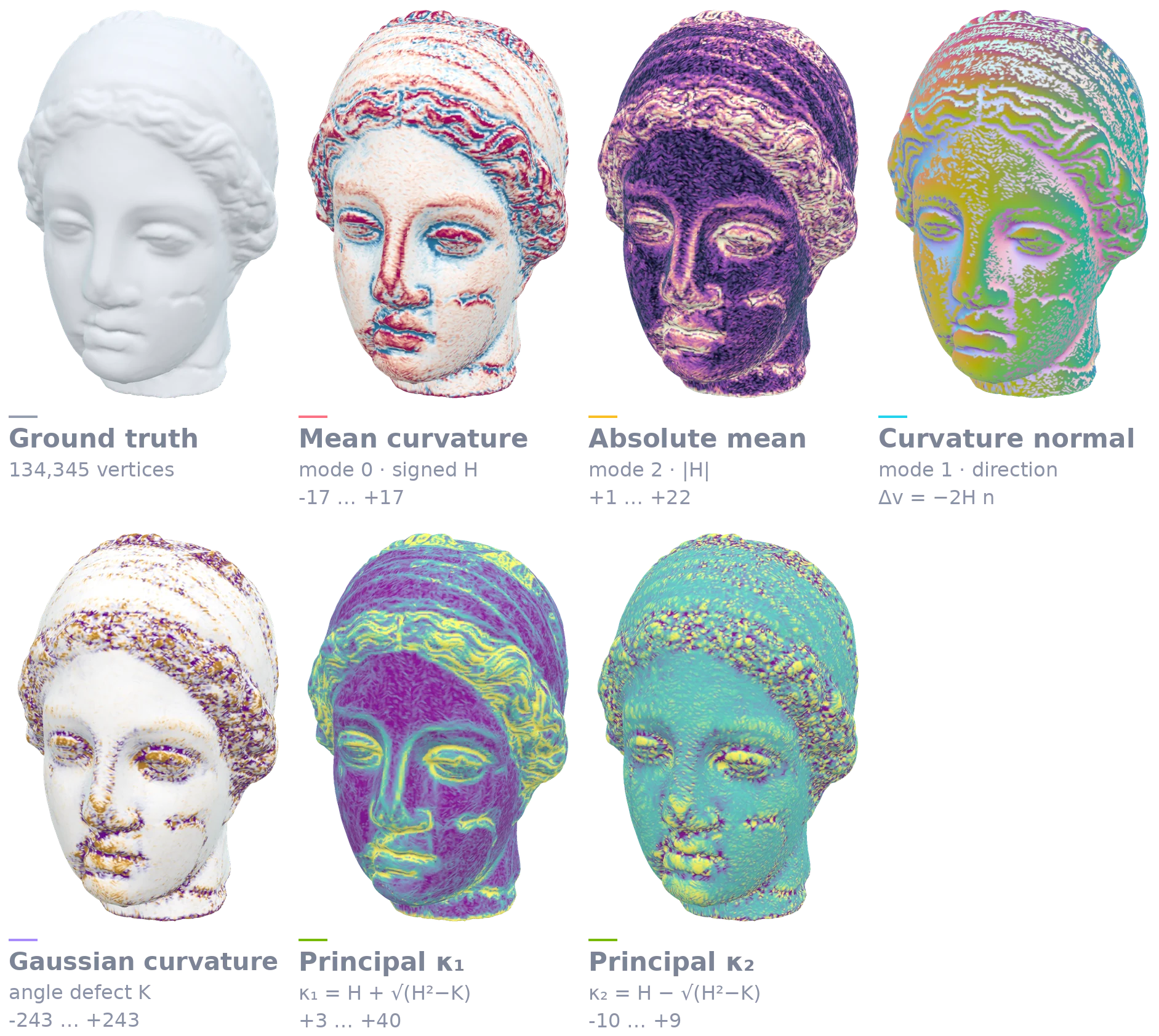
6 figures
Mesh
Ray queries, curvature, quality metrics and orientation repair on triangle meshes.
View gallery →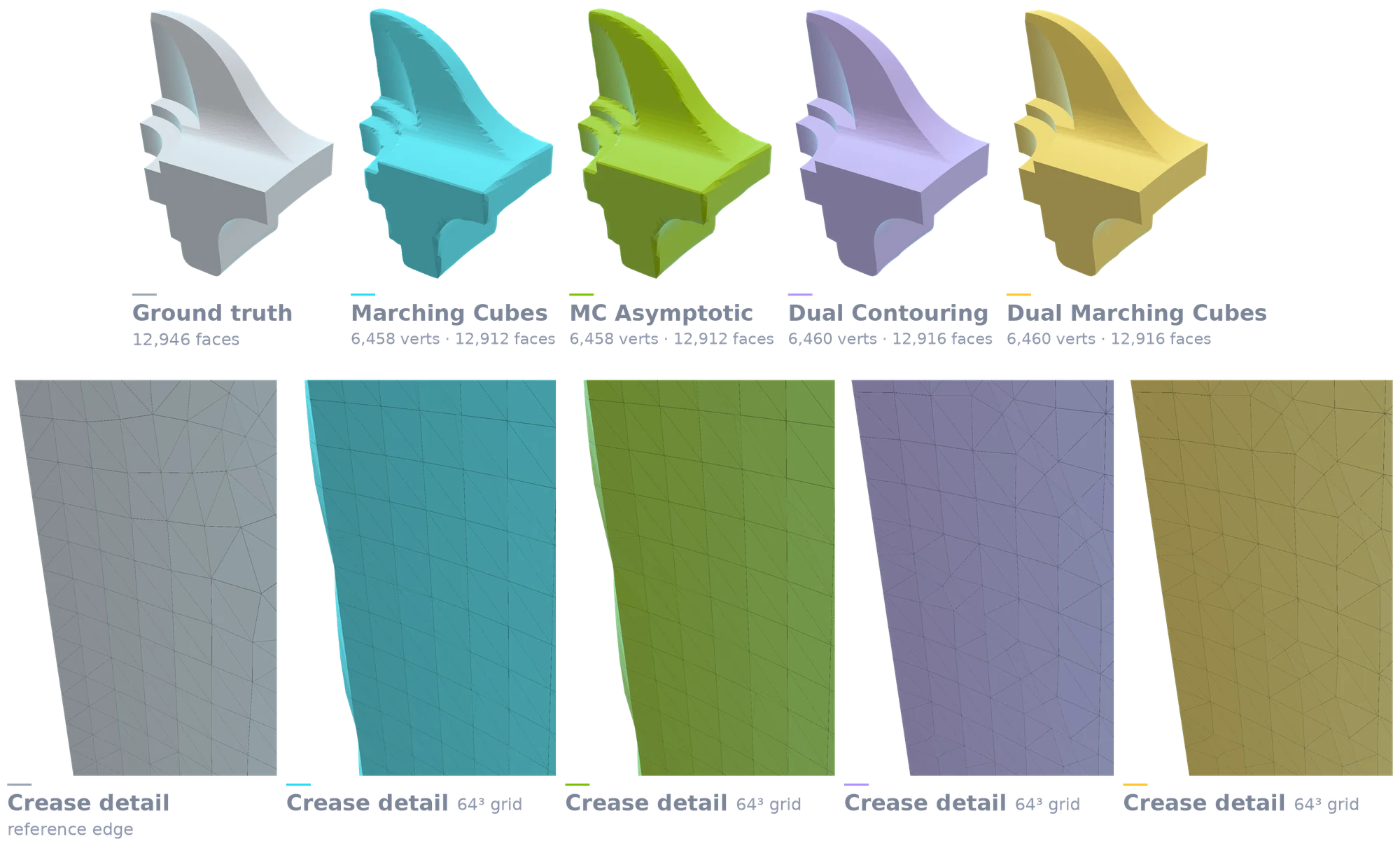
9 figures
Isosurface
From a signed distance field to a surface: extraction, sharp features, resolution, normals and differentiable rendering.
View gallery →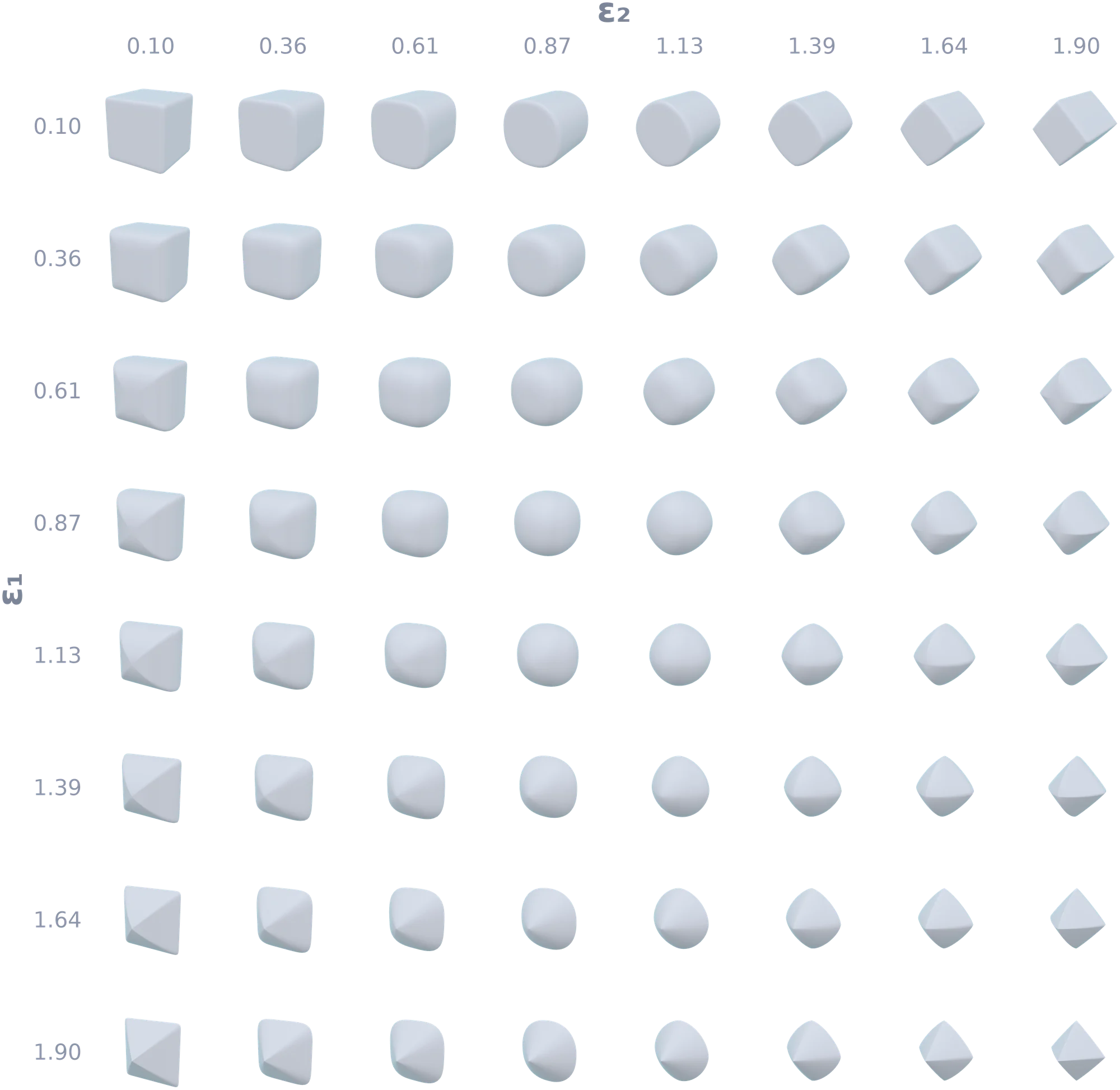
4 figures
Others
Spatial ordering, nearest-neighbour search and learnable superquadric primitives.
View gallery →
Get started
Install and extract a surface
pip install -U conquer3dPrebuilt CUDA wheels are published per release for Python 3.10–3.14 against PyTorch 2.8 and 2.11.
import torch
from conquer3d.data_structure import create_voxel_grid
from conquer3d.ops import dmc

grid_vertices, voxels, _ = create_voxel_grid(
    grid_min=[-1.0] * 3, grid_max=[1.0] * 3,
    res=[64, 64, 64], device="cuda",
)

sdf = (torch.norm(grid_vertices, dim=-1) - 0.6).requires_grad_(True)
verts, faces = dmc(grid_vertices, voxels, sdf, iso=0.0)

verts.sum().backward()          # gradients flow into the field